Frequently Asked Questions: Temporarily housing chickens indoors during H5 bird flu
Why are free-range chickens being kept indoors?
During an active H5 bird flu response, protecting bird health and welfare is a key priority. Temporarily keeping free-range chickens inside their houses is a proactive and preventative measure that reduces their exposure to wild birds that could carry the H5 bird flu virus.
Temporary housing may be required by government through a mandatory housing order or recommended as a voluntary additional precaution, depending on the circumstances and location.
How do wild birds spread H5 bird flu?
Wild birds, particularly waterbirds, can carry H5 bird flu virus. The virus can be spread through infected birds, droppings and other bodily secretions, and can contaminate water, soil, equipment, footwear and other materials. Outdoor access can therefore increase opportunities for chickens to encounter the H5 bird flu virus.
Is keeping chickens indoors bad for their welfare?
No. Chicken houses are specifically designed to provide birds with a safe and comfortable environment, with access to nutritious feed and clean drinking water, and careful management of temperature, ventilation, lighting and bedding.
Birds are also provided with enrichment, such as perches or platforms, interesting objects to peck at and areas for dust bathing. These encourage chickens to remain active, explore their environment and continue to express important natural behaviours.
Farmers closely monitor their birds’ health, behaviour and welfare to ensure their needs are being met.
How long will the chickens need to stay indoors?
Only for as long as necessary to manage the disease risk or comply with government requirements. The length of time will depend on factors such as the location and extent of the H5 bird flu detections/events, government housing requirements, surveillance results and the assessed risk from wild birds.
Can free-range chickens still be called free range if they are temporarily housed indoors?
There are specific consumer law and truth-in-labelling considerations which are enforced by the Australian Competition and Consumer Commission (ACCC). For further information, please refer to the Australian Competition and Consumer Commission (ACCC) guidance on free-range claims for poultry meat and eggs during avian influenza detections.
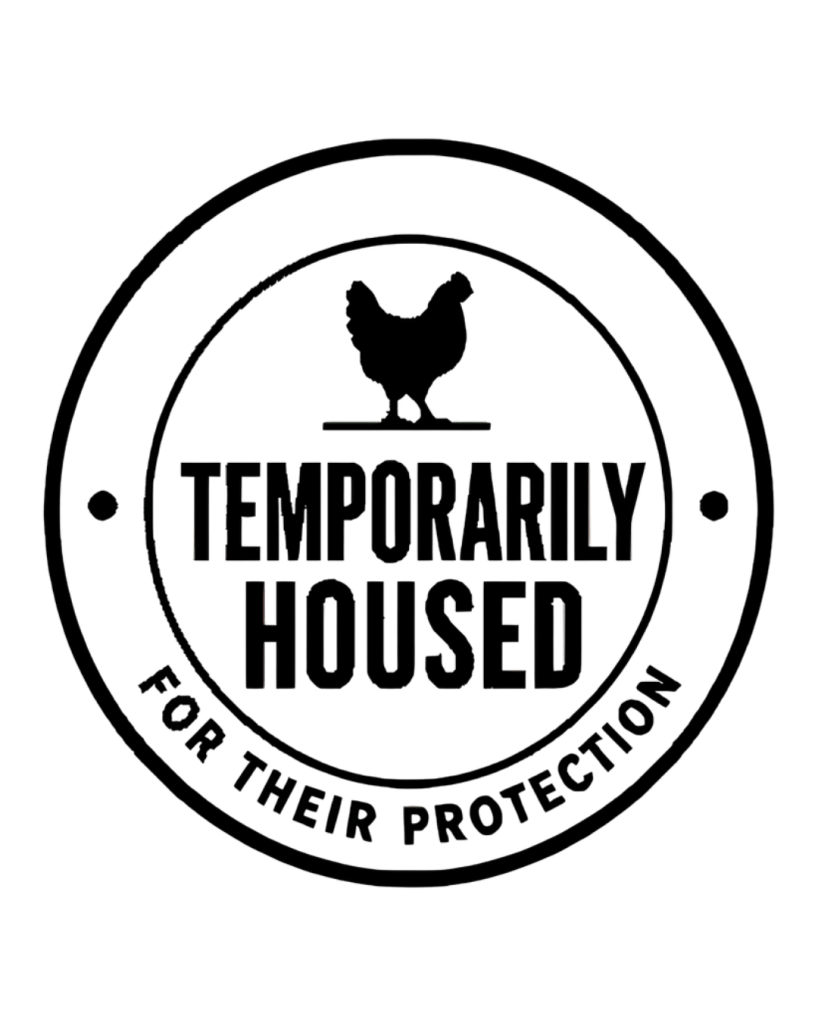
Why are some free-range products labelled with a “temporarily housed” sticker while others are not?
Free range chicken is produced all over Australia across many states and depending on the farm location and proximity to areas where H5 bird flu is present/active in wildlife, chickens on some farms may be housed as a preventative and protective measure. The sticker provides a clear indication of which birds were housed for their protection.
Is chicken meat safe to eat?
Yes. Food Standards Australia New Zealand, as the national government food safety standard setting body, has stated that consumers can be assured chicken and egg products on sale are safe to eat, and that there is no evidence humans can contract bird flu from consuming commercially produced products from chicken meat or eggs.
Where can I find more information about H5 Bird Flu?
For the latest information about bird flu in Australia, including current detections, how Australia is responding, biosecurity advice and information about protecting poultry and other birds, visit the Australian Government’s Bird Flu information hub:
Australian Government – Bird Flu (Avian Influenza)
birdflu.gov.au – Australian Government Department of Agriculture, Fisheries and Forestry
You can also find information specific to your state or territory through your relevant government agriculture or biosecurity agency:
- New South Wales: NSW DPIRD – Avian influenza
- Victoria: Agriculture Victoria – H5 bird flu
- Queensland: Queensland Government – Avian influenza
- South Australia: PIRSA – H5 bird flu
- Western Australia: WA Government – H5 bird flu information
- Tasmania: Biosecurity Tasmania – H5 Bird Flu
- Australian Capital Territory: ACT Government – Avian influenza (bird flu)
- Northern Territory: NT Government – Avian influenza
If you see unusual illness or deaths in poultry, livestock or wild birds, don’t touch or move the animals and report it immediately.
Emergency Animal Disease Watch Hotline: 1800 675 888
Early reporting helps protect animal health, food production and Australia’s biosecurity.

